
NUSES: New methods and tools for astroparticle physics in space
NUSES is an Italian-led space mission designed to test innovative technologies and observation strategies for the study both low- and high-energy cosmic radiation. It was proposed by the Gran Sasso Science Institute (GSSI) and developed in collaboration with the Italian National Institute for Nuclear Physics (INFN), the Italian Space Agency (ASI) and Thales Alenia Space Italy (TAS-I). NUSES brings together scientists, engineers, and institutions from across Europe and beyond. It was initially funded through Italy’s Programma Restart that aims at boosting research and technology in the L’Aquila region. With the combined expertise of research institutes, universities, and industrial partners, it aims to open new frontiers in our understanding of several aspects of the cosmic radiation. The NUSES payload carries two very different instruments, each with a distinct scientific purpose:
Terzina
is a compact Cherenkov telescope designed to study ultra-high energy cosmic rays (UHECRs) and astrophysical neutrinos. This telescope can probe the energy region above 50 PeV and detects the Cherenkov light generated when these particles produce extensive air showers in the Earth’s atmosphere. The particle separation capability is based on the shower geometry: by observing just above the Earth horizon, Terzina captures showers initiated by cosmic rays in the atmosphere, while by pointing just below the horizon it can detect upward-moving showers from Earth-skimming neutrinos.
Zirè
is a calorimetric detector optimized for the detection of charged cosmic rays up to hundreds MeV and gamma rays in the MeV range. It measures electrons, protons, and light nuclei below 300 MeV, and photons up to tens of MeV, providing valuable insight into low energy galactic cosmic rays, space weather phenomena, including solar flares and coronal mass ejections, as well as into transient astrophysical events such as gamma-ray bursts (GRBs). Zirè also investigates possible correlations between variations in charged particle flux and Earth-based phenomena such as earthquakes and volcanic eruptions, exploring the complex coupling between the magnetosphere, ionosphere, and lithosphere.
Beyond its scientific objectives, NUSES is also a technology pathfinder. The mission will validate new technological solutions in space-based observations, including:
- Silicon photomultipliers (SiPMs) for highly sensitive light detection
- Radiation mitigation and recovery techniques (shielding and annealing)
- Scintillating fiber tracking technology
- Low-power, space-qualified electronics based on commercial components
- On-board data processing using machine learning algorithms
- 3D-printed mechanical structures for lightweight design
The satellite will follow a Sun-synchronous Low-Earth Orbit (LEO) at an altitude of approximately 550 km and an inclination around 97°, with a nominal duration of at least three years.
Terzina: Advancing the Frontiers of High-Energy Particle Detection.
Terzina is a compact telescope that aims to open a new observational window on some of the most energetic and mysterious particles in the universe: Ultra-High Energy Cosmic Rays (UHECRs) and high-energy neutrinos.
These elusive messengers carry information from extreme cosmic environments such as supermassive black holes or active galactic nuclei, which are incredibly difficult to detect from the ground. Terzina takes on this challenge by using the Earth’s atmosphere itself as a gigantic detector.
When these energetic particles interact with the molecules in the atmosphere, they start Extensive Air Showers (EASs), i.e. cascades of secondary particles that move faster than light through the air. This process generates faint flashes of Cherenkov light, which Terzina will observe from orbit.
By looking just above or just below the Earth’s limb (the visible edge of the planet), Terzina can observe two types of phenomena.
When pointing above the limb, it will record showers caused by UHECRs entering the atmosphere from space.
When pointing below the limb, it will search for upward-moving showers created by neutrinos that have skimmed through the Earth and interacted within its crust.
Though these events are exceedingly rare, their detection from space could provide a unique view of the high-energy neutrino sky, an area still inaccessible to ground-based observatories.
Thanks to its wide field of view and the advantages of operating in Low Earth Orbit (LEO), Terzina will test an entirely new technique for studying cosmic particles at energies far beyond those reached by current experiments. If successful, it could pave the way for future dedicated space missions exploring the extreme universe.
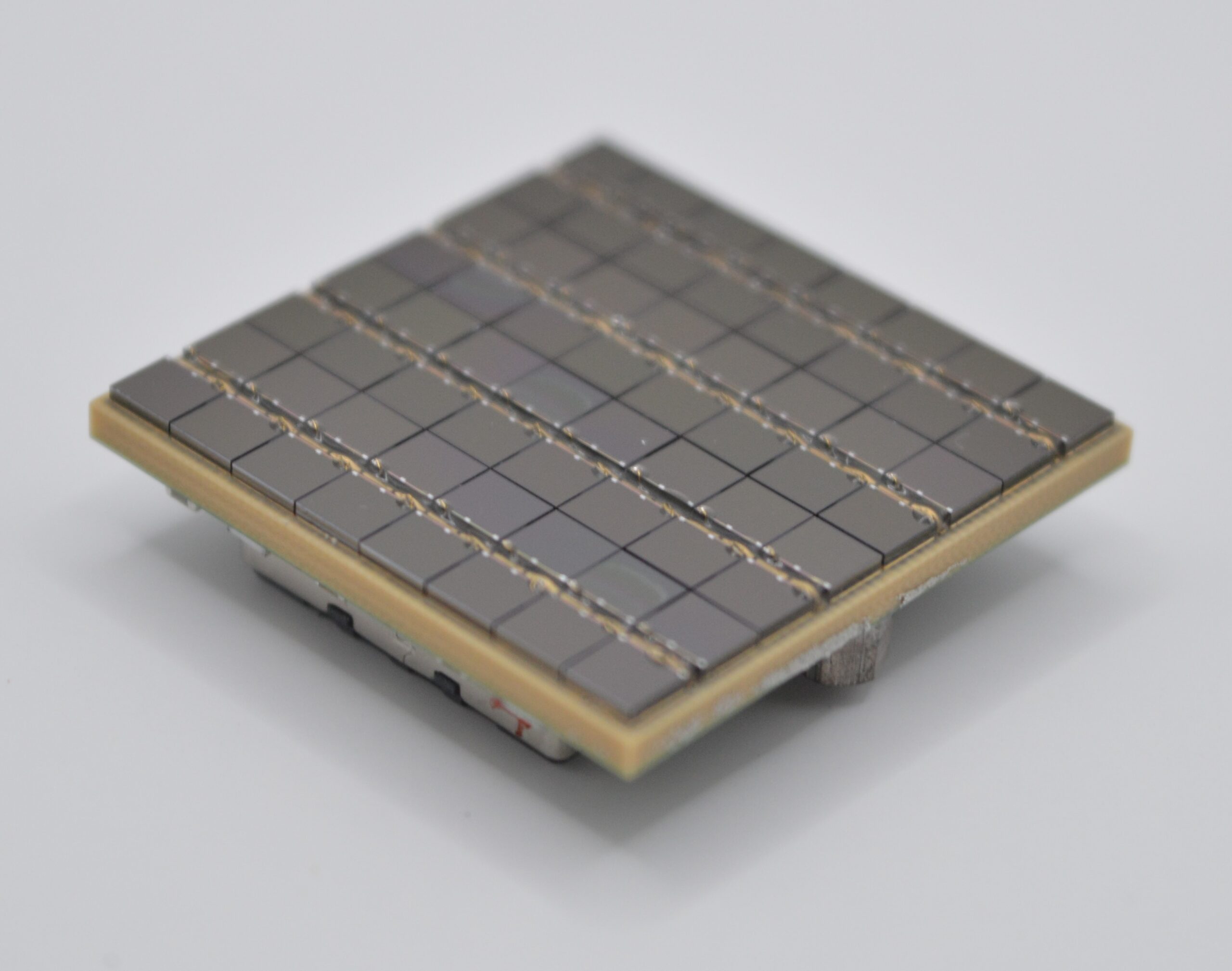
SiPM tile
One of Terzina’s silicon photomultiplier (SiPM) tiles. Each tile contains an 8 × 8 grid of sensors (64 in total), with individual pixels measuring 3 × 3 mm². These detectors are capable of registering near-ultraviolet photons.
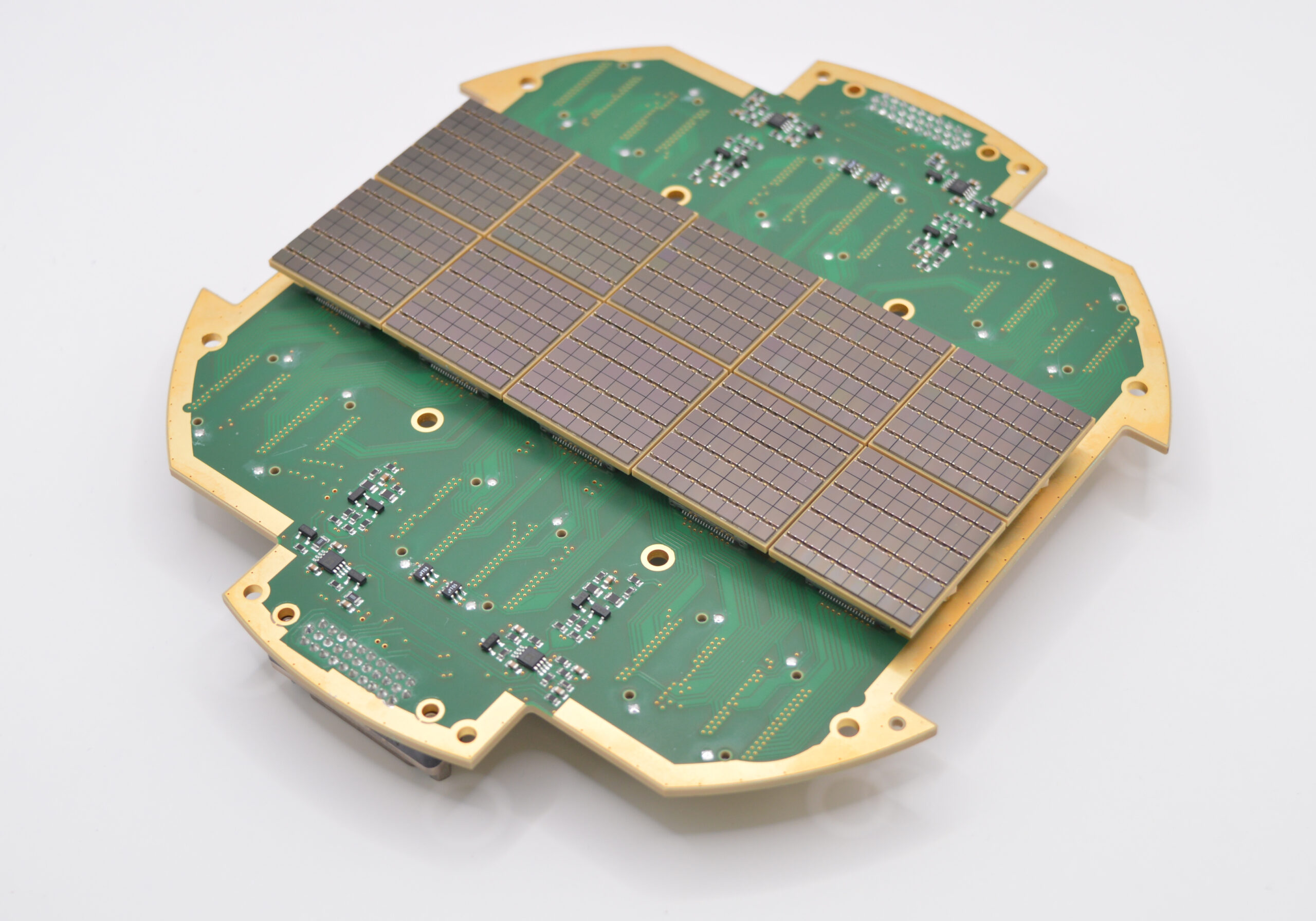
Focal Plane Assembly
The Focal Plane Assembly (FPA) of Terzina acts as the telescope’s camera. It is equipped with 10 arrays of silicon photomultipliers, totaling 640 pixels, each sensitive to single ultraviolet photons. Positioned 145 mm behind the main mirror, the FPA records Cherenkov light with a field of view of about 7.4° × 3.0°, enabling Terzina to monitor more than hundreds of square kilometers of atmosphere at once.
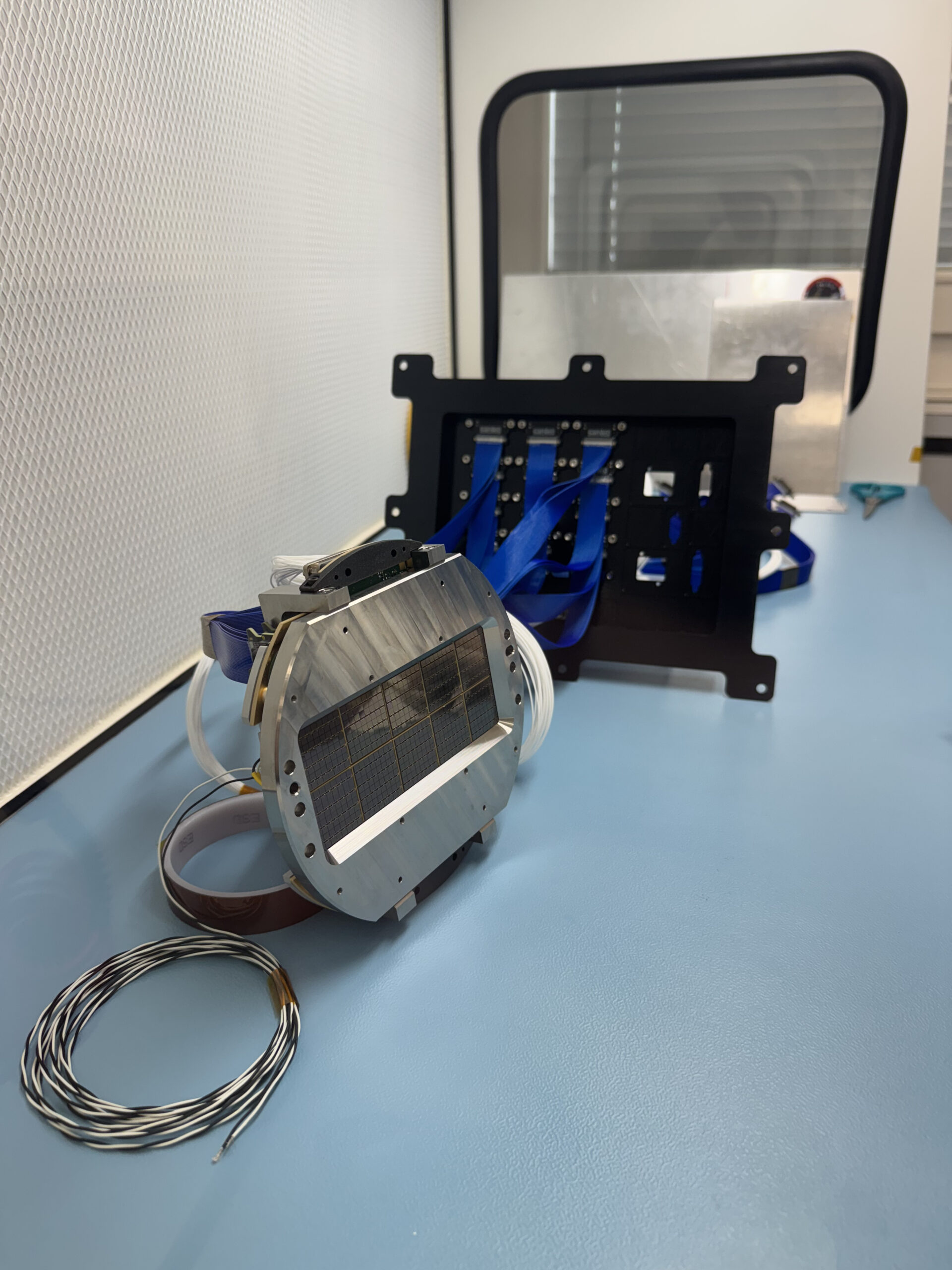
Full Integration
The Focal Plane Assembly (FPA) of Terzina after the full integration completed in June 2025. The sensor plane, the titanium mechanical structure in the foreground, and the aluminum back plate are visible.
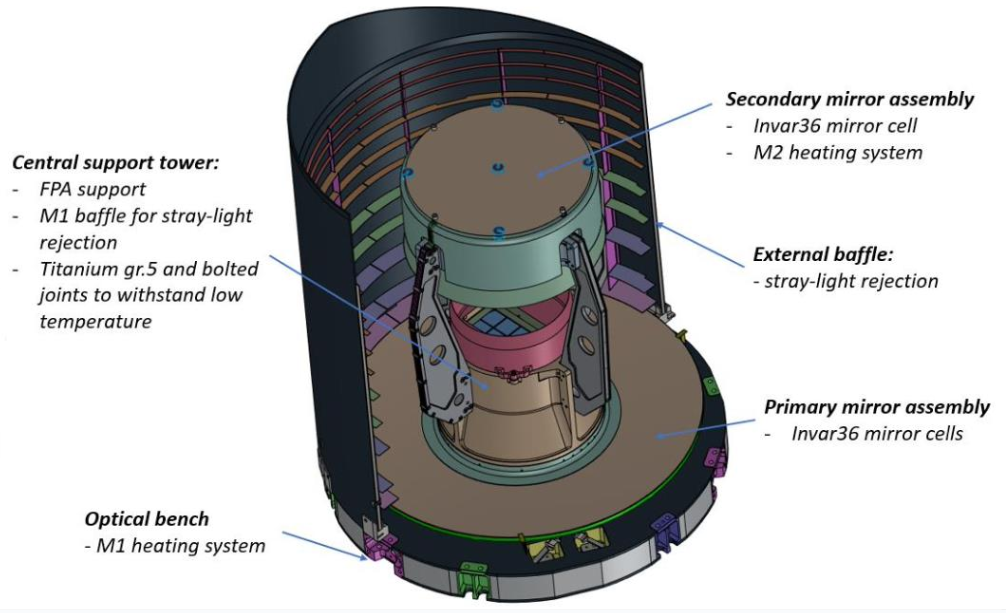
Telescope layout
Layout of the Terzina telescope showing the baffle, mirrors, Focal Plane Assembly (FPA), thermal radiator, and the mechanical interface with the satellite platform.
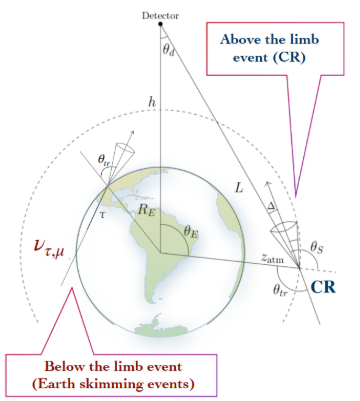
Looking at the atmosphere limb
•Just above: Cherenkov emission of UHECRs induced air showers.
Primary particles: CRs (> 100 PeV) impinging the atmosphere above the Earth’s limb.
•Just below: Cherenkov pulse produced by upward-moving EAS.
Primary particles: τ and μ decay or interactions (ντ,νμ of E> few PeV)
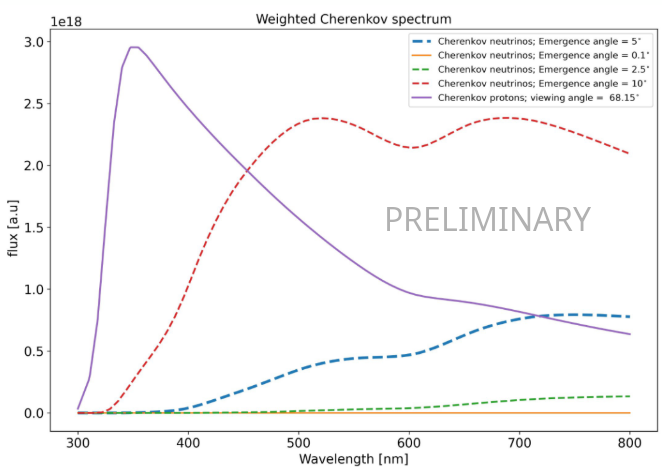
Cherenkov photon spectrum at Terzina’s orbital altitude
•Just above: Cherenkov emission of UHECRs induced air showers.
Primary particles: CRs (> 100 PeV) impinging the atmosphere above the Earth’s limb.
•Just below: Cherenkov pulse produced by upward-moving EAS.
Primary particles: τ and μ decay or interactions (ντ,νμ of E> few PeV)
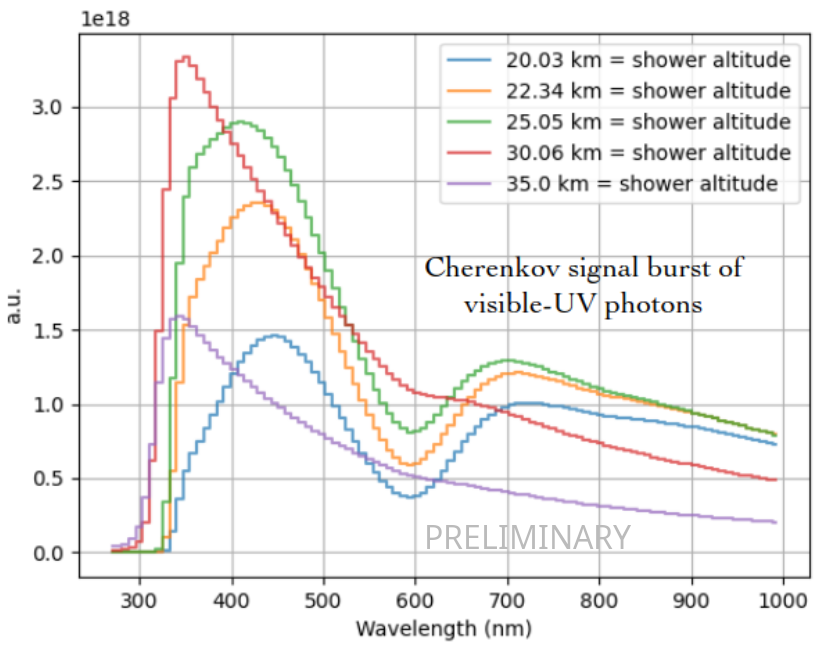
Influence of the first interaction altitude on photon production
Cherenkov photon spectrum at Terzina’s altitude from a 100 PeV proton–induced air shower, showing the influence of the first interaction altitude on photon production.
The figure illustrates how the altitude of the first interaction of a high-energy proton in the atmosphere affects the resulting Cherenkov light spectrum detected at Terzina’s orbit.
Showers starting higher in the atmosphere produce fewer photons that reach space, while those initiating deeper generate stronger and more concentrated signals.
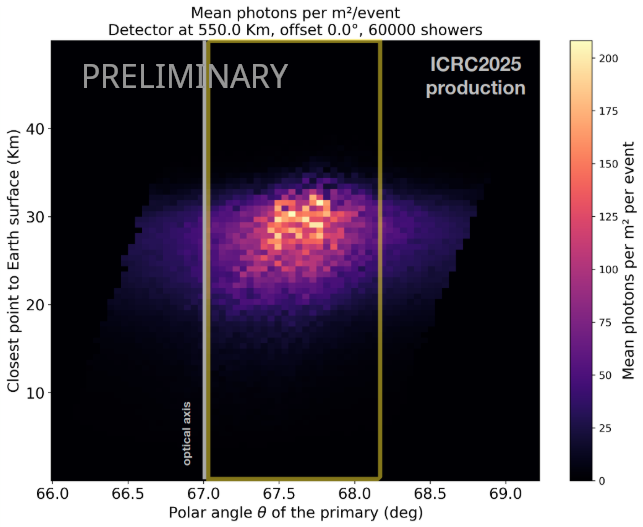
Average Cherenkov photon density
This figure presents the average number of Cherenkov photons (photons per m²) reaching Terzina’s orbit, from 60 000 simulated UHE proton–induced air showers as observed by Terzina at 550 km altitude.
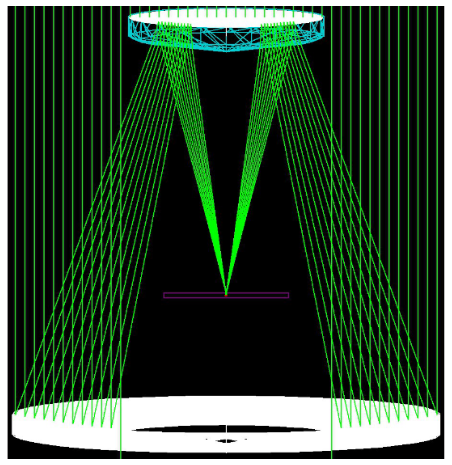
Layout of the
Terzina optical system
The schematic layout illustrates the primary and secondary mirrors, the correcting lens, and the focal plane assembly (FPA) equipped with SiPM sensors.
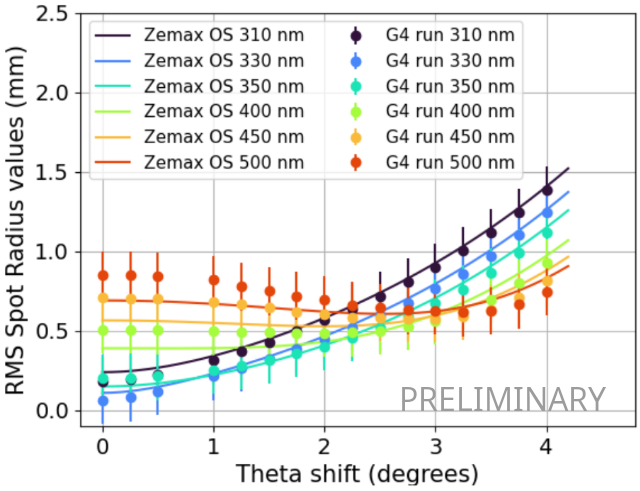
Comparison of the
simulated spot radius (RMS)
The chart compares the simulated spot radius (RMS) for the Terzina optical system, as a function of the off–axis angle and for different wavelengths, obtained using two independent simulation tools.
This figure compares results from two different optical modeling simulations, showing how the spot size, a measure of image sharpness, varies with viewing angle and wavelength.
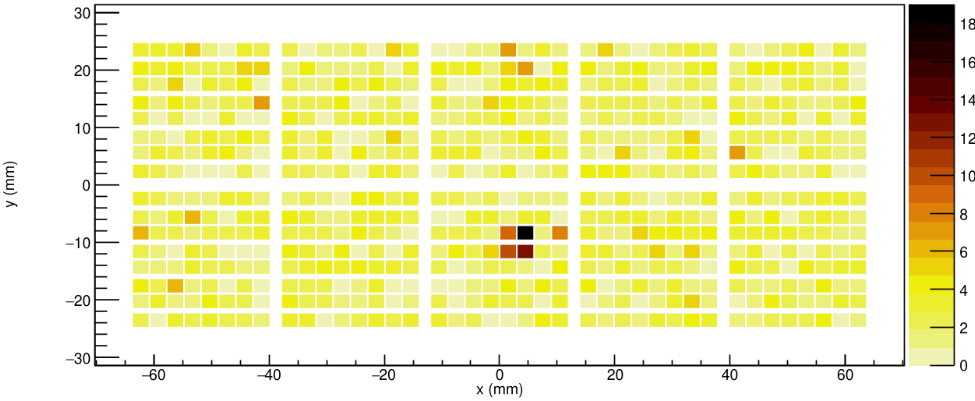
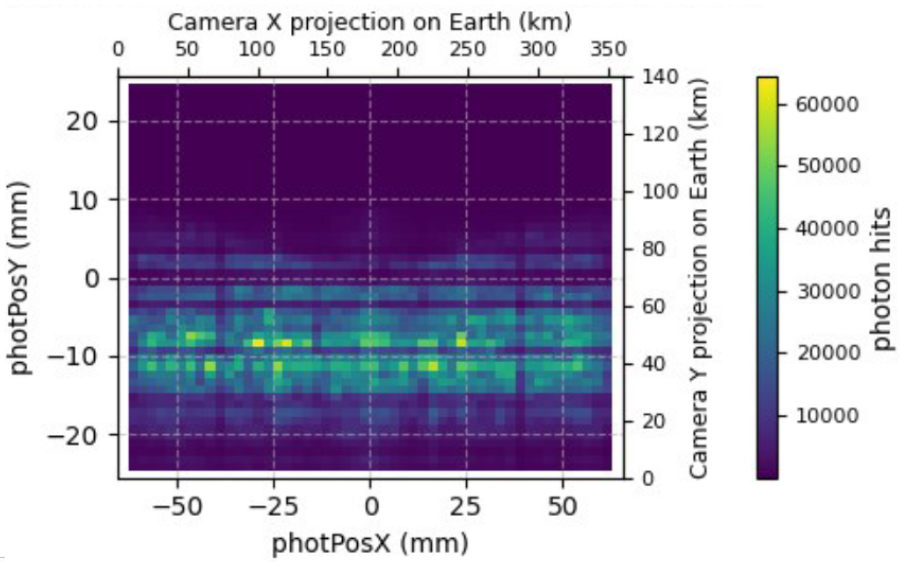
Events on the camera plane
On the upper chart, 1000 PeV proton event with 2 MHz of uniform NSB background. On the bottom chart, example of the photon hits in the camera for a 3000 PeV proton induced air shower, in normal acquisition conditions.
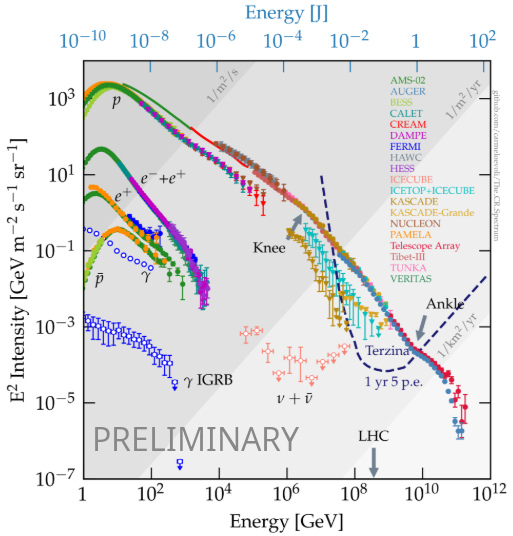
Terzina’s sensitivity to cosmic protons
1 year Terzina’s sensitivity to cosmic protons compared to existent measured all particle cosmic ray spectra.
Zirè: Bridging Cosmic Phenomena and Earth Science.
Zirè turns its attention to low-energy cosmic rays and gamma rays. This versatile instrument will explore the dynamic relationship between cosmic radiation, solar activity, and even geophysical processes occurring on our own planet, also testing new tools for GRB detection.
Zirè will detect charged cosmic particles with energies ranging from a few million to several hundred million electronvolts (MeV), as well as photons in the MeV range. These measurements will contribute to the study of Gamma-Ray Bursts (GRBs), some of the most powerful explosions known in the universe and to the search for electromagnetic counterparts of gravitational wave (GW) events. The mission’s timeline will overlap with that of next-generation GW detectors, offering exciting opportunities for multi-messenger astronomy.
Cosmic rays in the low-energy range are sensitive tracers of solar activity, which follows an 11-year cycle and produces intense bursts such as Solar Flares (SFs) and Coronal Mass Ejections (CMEs). By orbiting the Earth on a Sun-synchronous trajectory, Zirè will regularly pass through high-latitude regions, where the influence of the solar wind and geomagnetic field is strongest. There, it will measure electrons, protons, and light nuclei to monitor how solar conditions modulate cosmic radiation in near-Earth space.
In addition to astrophysical studies, Zirè will investigate possible connections between variations in cosmic and electromagnetic activity and natural phenomena on Earth, such as earthquakes and volcanic eruptions. Its observations could help test the Magnetospheric–Ionospheric–Lithospheric Coupling (MILC) model, which proposes that changes in the Earth’s electromagnetic environment, driven by seismic activity, can influence the distribution of charged particles trapped in the Van Allen Belts.
A dedicated Low Energy Module (LEM) extends Zirè’s sensitivity even further, allowing to detect very low energy electrons and study particle precipitation from the magnetosphere. These measurements could reveal how natural or anthropogenic electromagnetic disturbances affect the near-Earth radiation environment, a topic with implications not only for basic science but also for space weather forecasting and satellite protection.
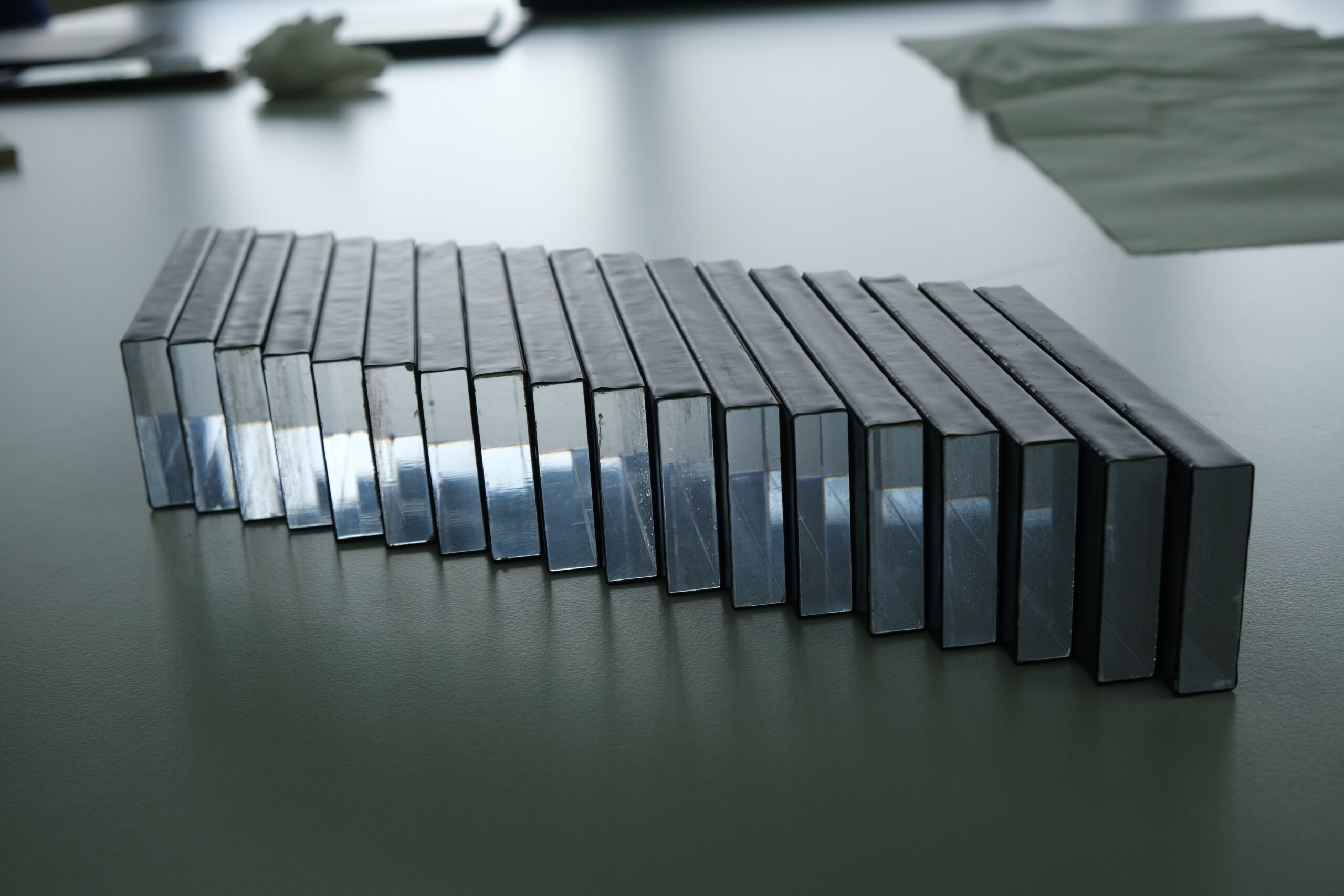
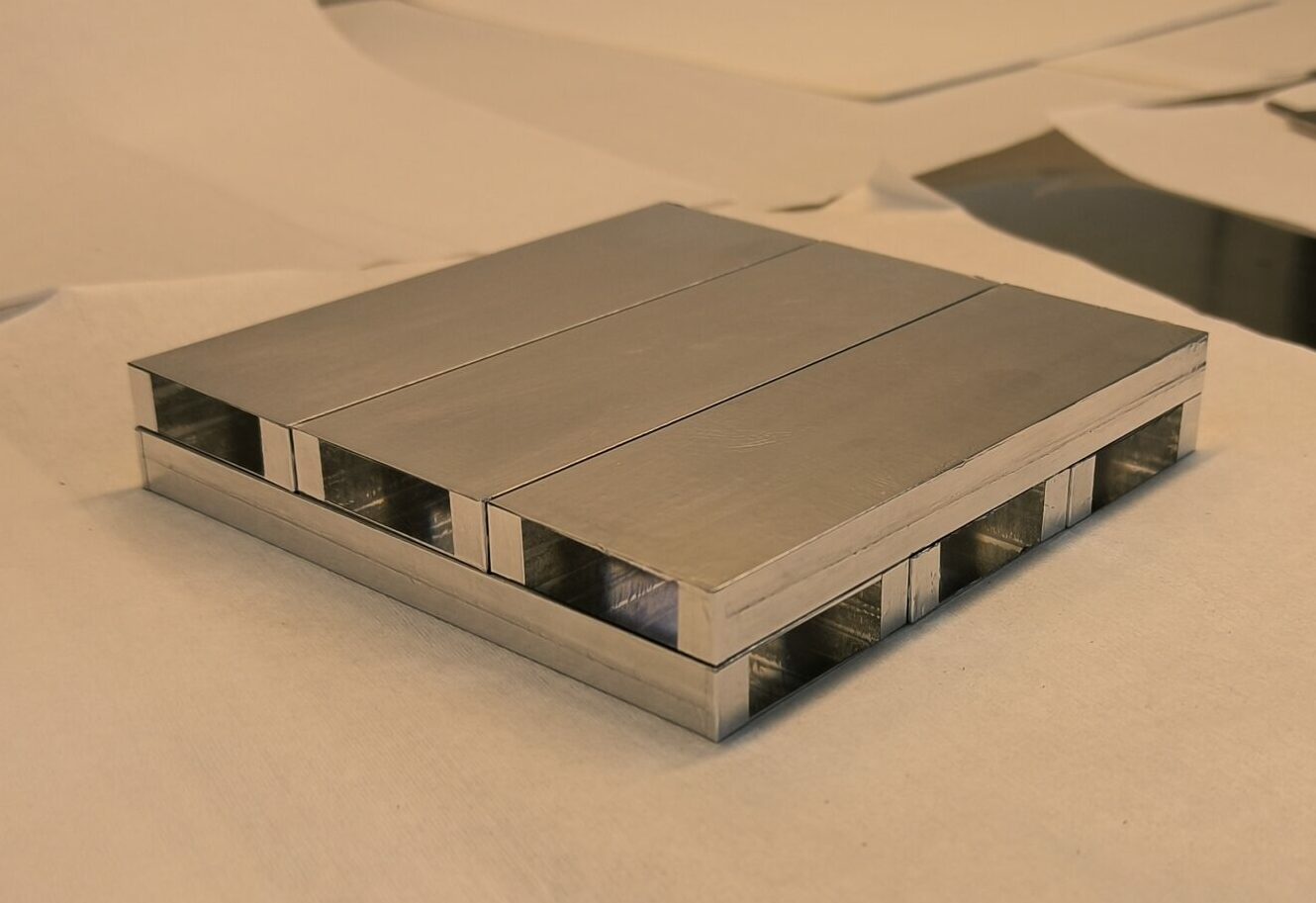
Plastic Scintillator Tracker
Zirè’s Plastic Scintillator Tracker (PST), a column of 32 layers of scintillators. The top six layers measure 12 × 12 × 1 cm³, while the remaining 26 are thinner (0.5 cm). Each layer is made by three independent bars. This system records the energy deposit profile of the incoming particles and helps reconstructing their total kinetic energy and trajectory.
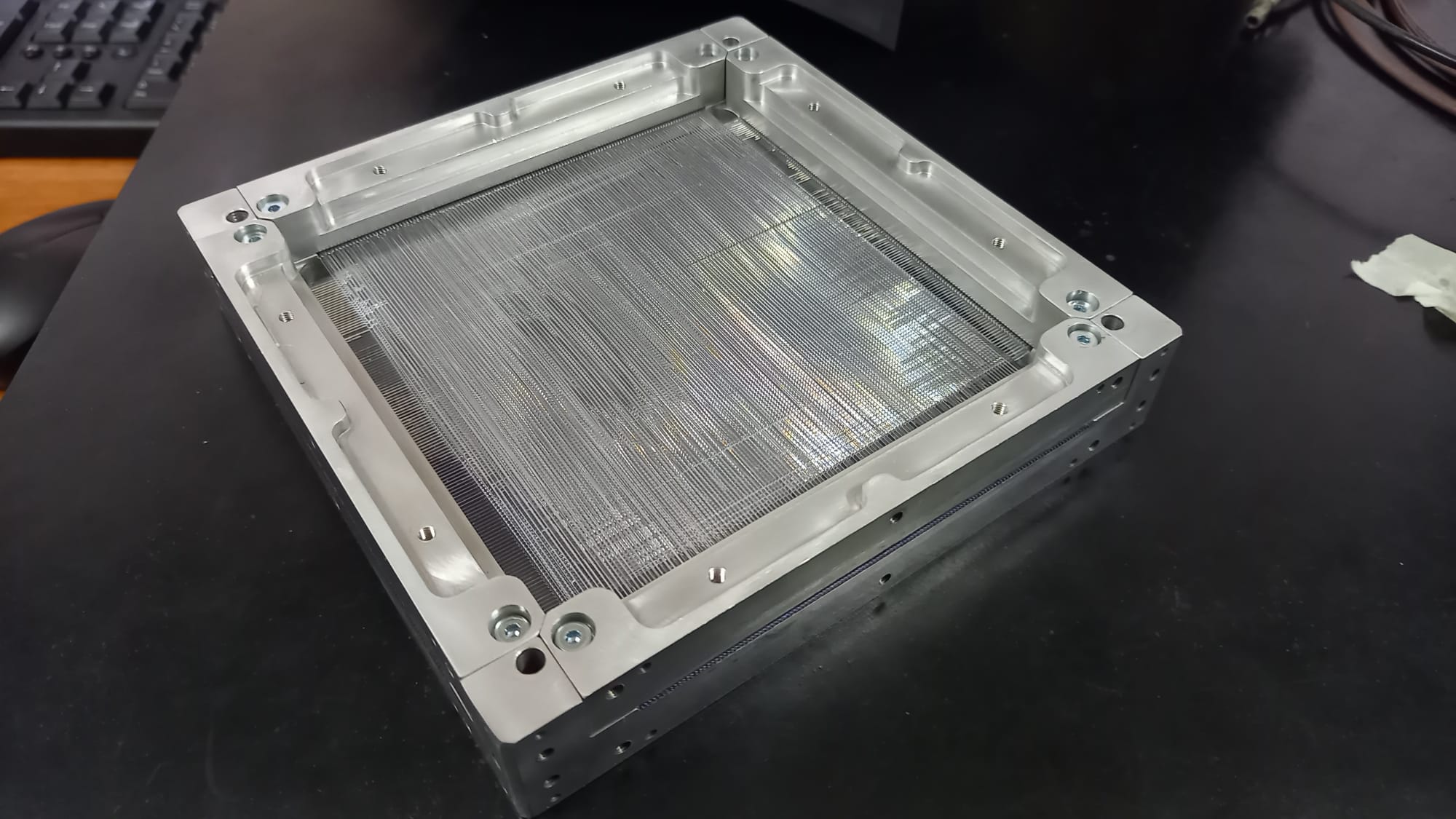
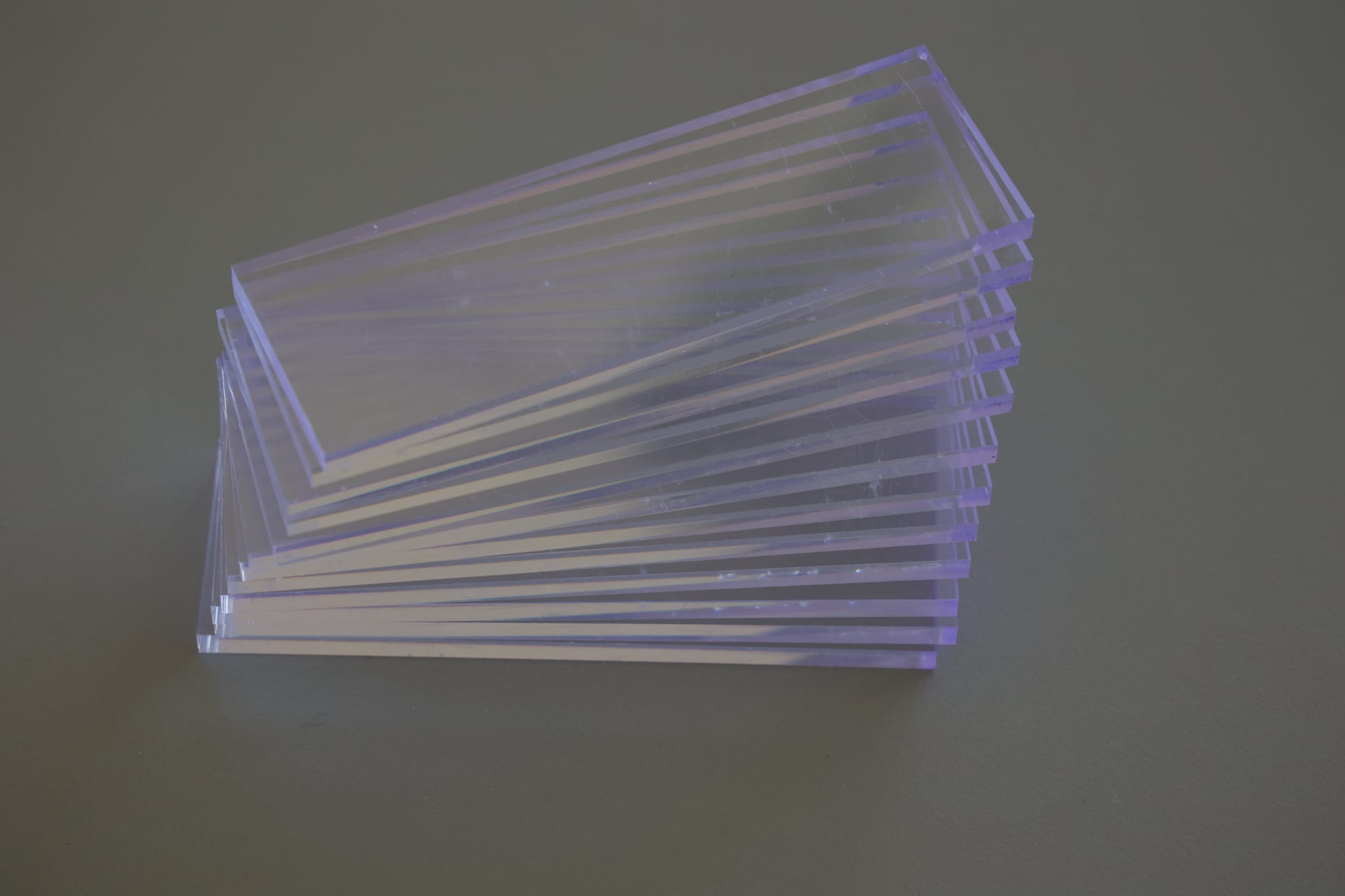
Fiber Tracker
One of the three Zirè’s Fiber Tracker (FTK) modules. Each has a cross-section of 9.6 × 9.6 cm², built from perpendicular scintillating fiber planes just 1.4 mm thick. These modules provide precise tracking of particle direction while keeping the detection threshold low.
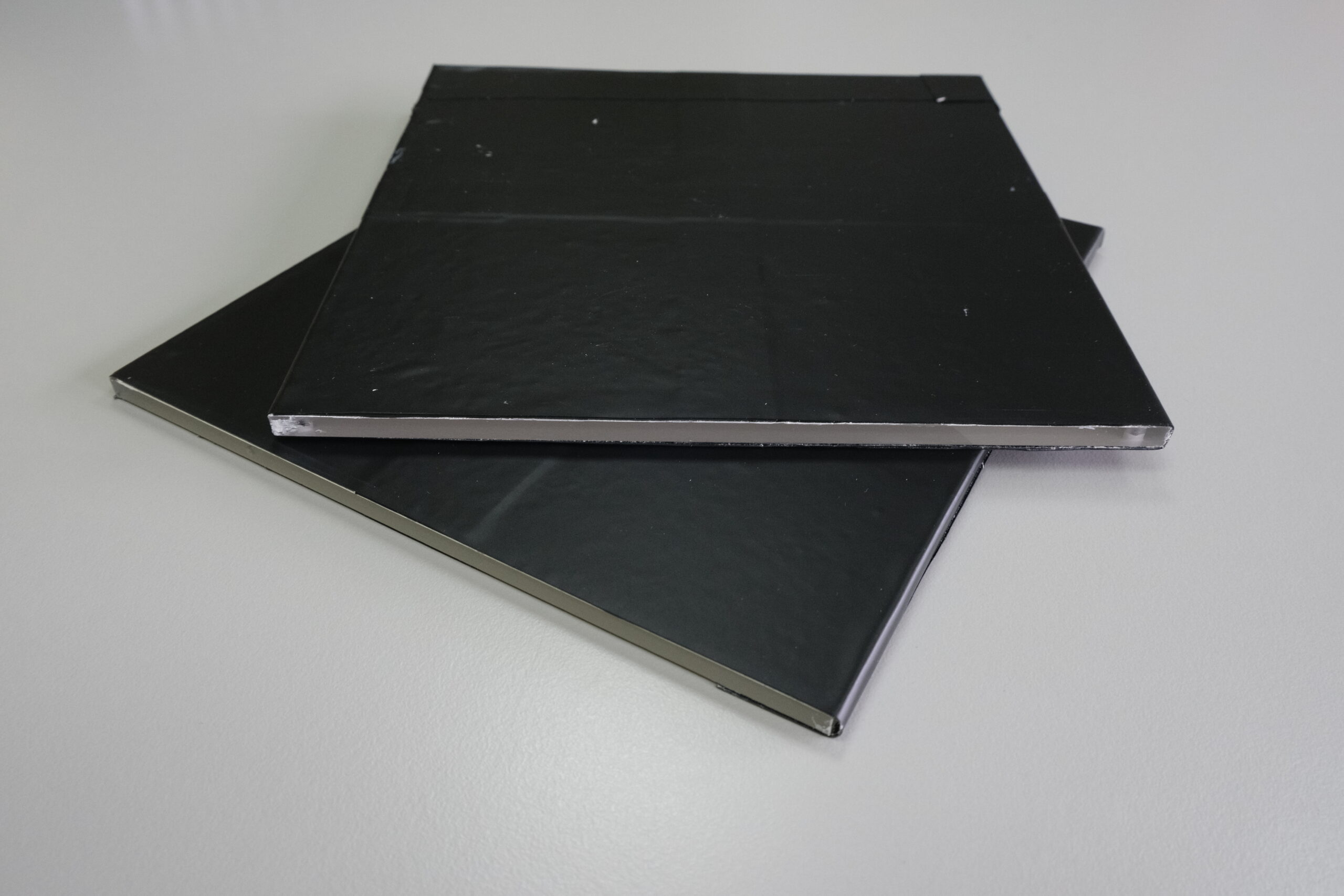
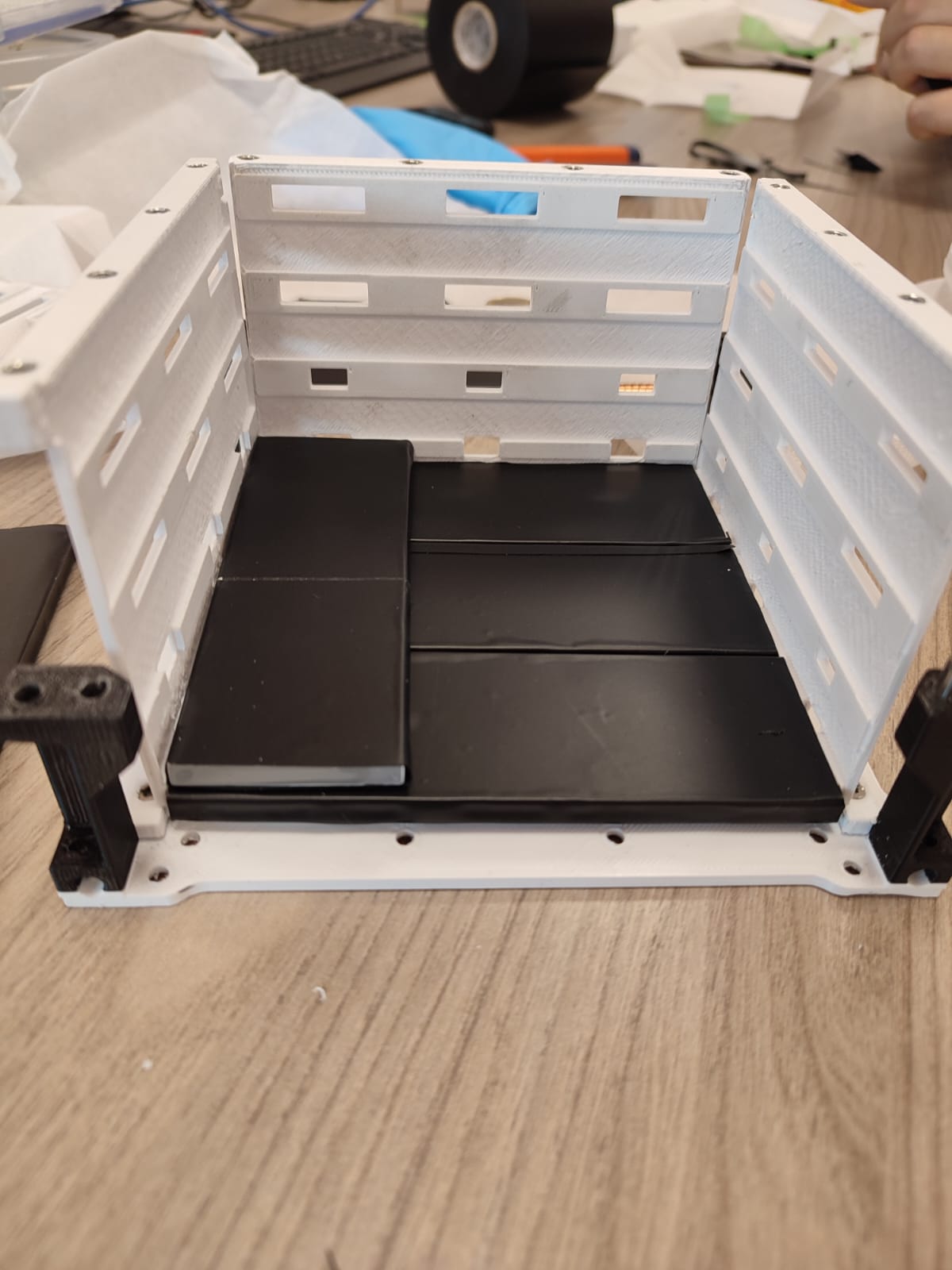
AntiCoincidence System
Two of the plastic scintillator tiles of Zirè’s Anti-Coincidence System. The ACS surrounds the detector from five sides, helping in the selection of contained events and in photon tagging.
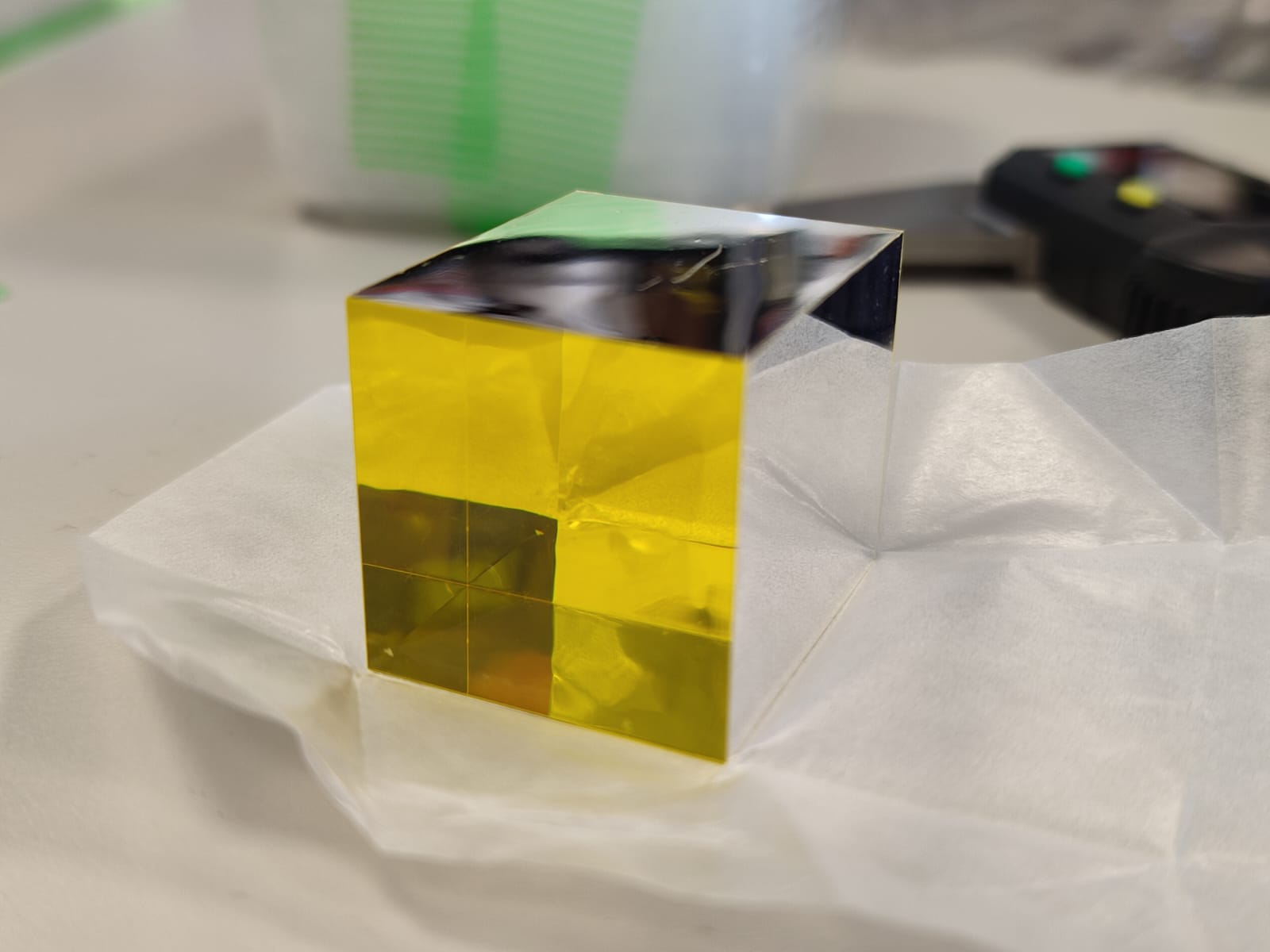
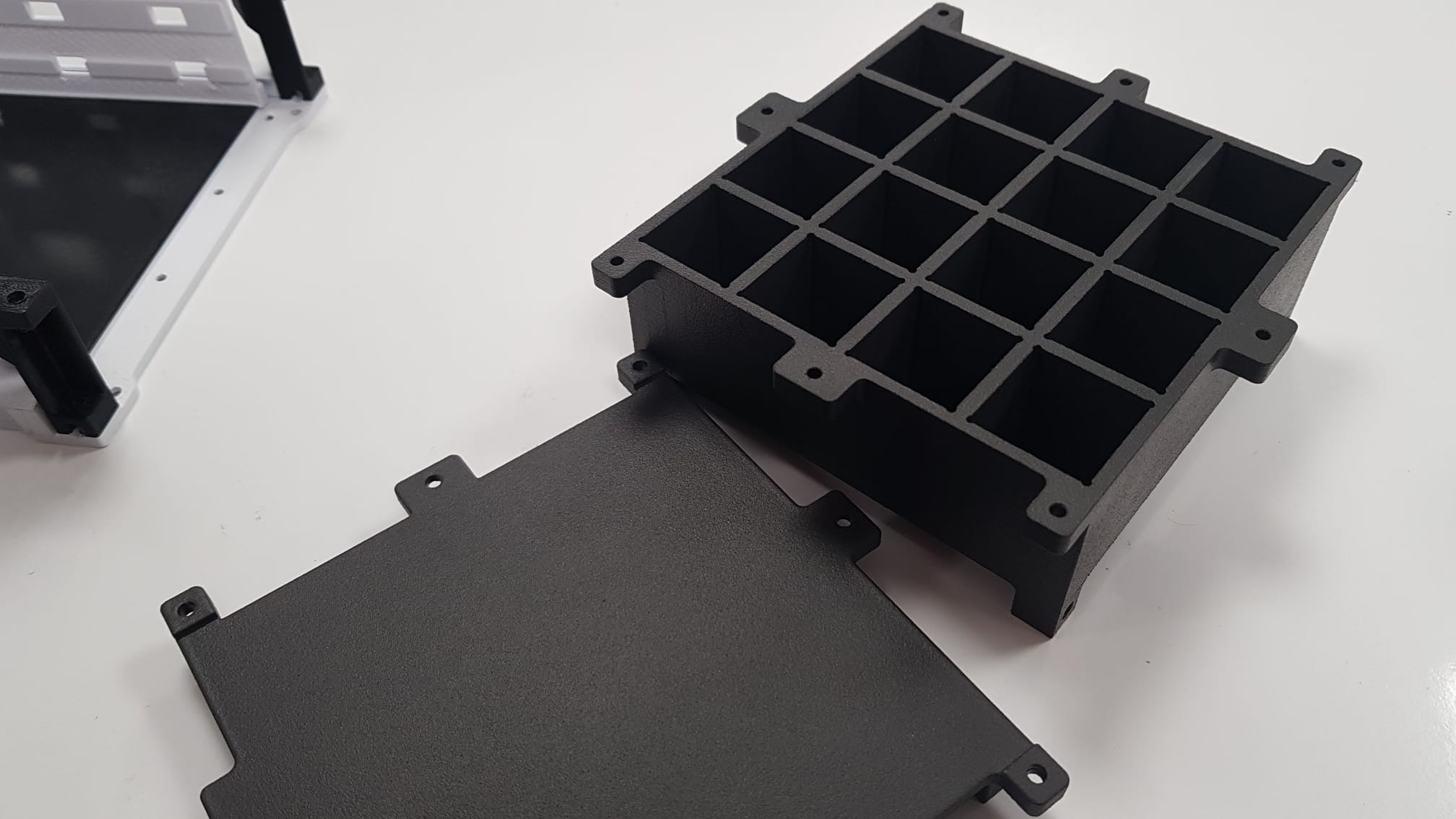
Calorimeter
Zirè’s calorimeter is made by a 4 × 4 × 2 array of GAGG (Gadolinium Aluminum Gallium Garnet) crystals, each measuring 2.5 × 2.5 × 3.0 cm3. The goal of Zirè’s calorimeter is twofold. On one hand it will increase the containement of charged particles that previously crossed the FTK and then the PST, then helping in the kinetic energy measurement. On the other hand, by using two other suitable thin window, it will be used as photon detector in the 0.1-30MeV range for GRB studies.
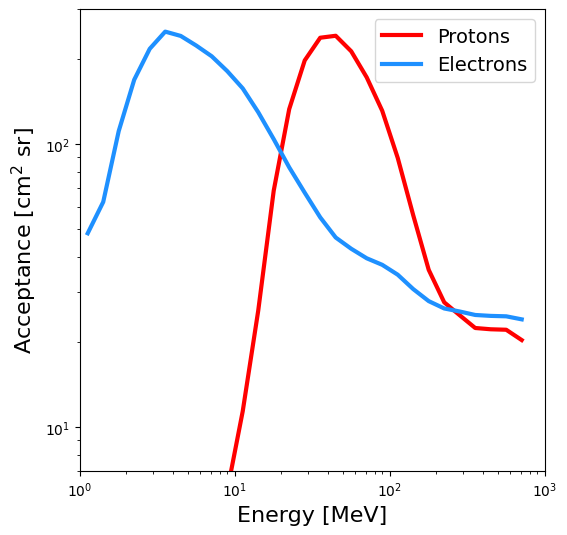
Zirè acceptance
for electrons and protons
The different curves show the instrument’s acceptance for electrons (in blue) and protons (in red).
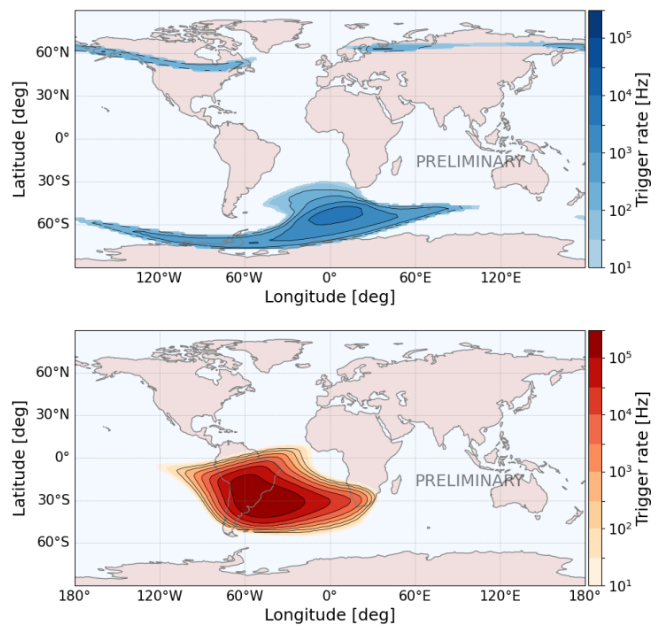
Expected trigger rates
due to trapped particles
This figure shows the expected trigger rates, due to charged particles trapped in Earth’s magnetic field, in one of the possible trigger configuration for Zirè. The upper panel represents electrons (in blue), while the lower one shows protons (in red).
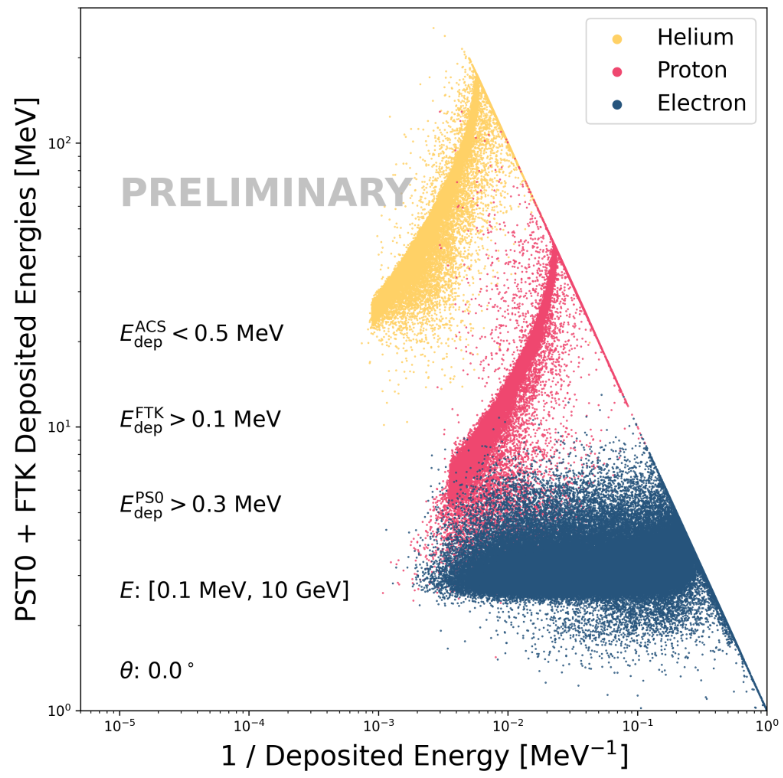
Particle identification
The energy deposited in the FTK and the first layer of the Plastic Scintillator Tracker, can be used for particle identification.
Nuclei electric charge
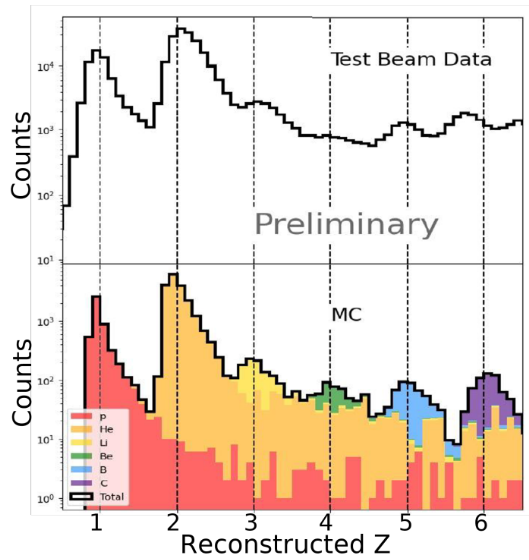
Nuclear electric charge (Z) measured with the Plastic Scintillator Tracker (PST) at the CERN’s SPS beam test facility (upper panel), compared with the Z spectrum expected from simulations on the basis of the beam composition (bottom panel). The close agreement between the two spectra confirms the detector’s ability to measure and identify the nuclear charge (Z) of incoming particles.
LEM detection concept and particle identification
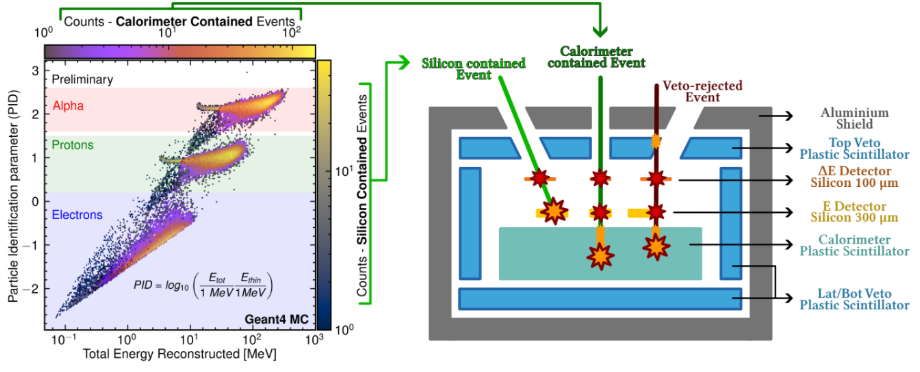
The Low-Energy Module (LEM) is a compact spectrometer designed to measure the direction, energy, and composition of low-energy charged particles with event-level resolution. The fully assembled detector is a compact 10 ×10 ×10 cm³ cube, hosting five independent Δ𝐸–𝐸 channels pointing towards the zenith. On the left, the plot shows how electrons, protons, and alpha particles occupy distinct regions in the PID–energy plane, making it possible to identify each event individually. The colour scale indicates the event density on a logarithmic scale, highlighting the clear separation between particle types. On the right, a diagram illustrates how the Low Energy Module (LEM) detects incoming particles. Depending on their energy, particles may stop within the silicon layers, pass through into the plastic scintillator calorimeter, or be rejected by the surrounding veto detectors. This combination of ΔE–E telescopes with active collimation and veto systems ensures that only well-reconstructed and correctly identified events are used in scientific analyses.